 SYSOI
SYSOI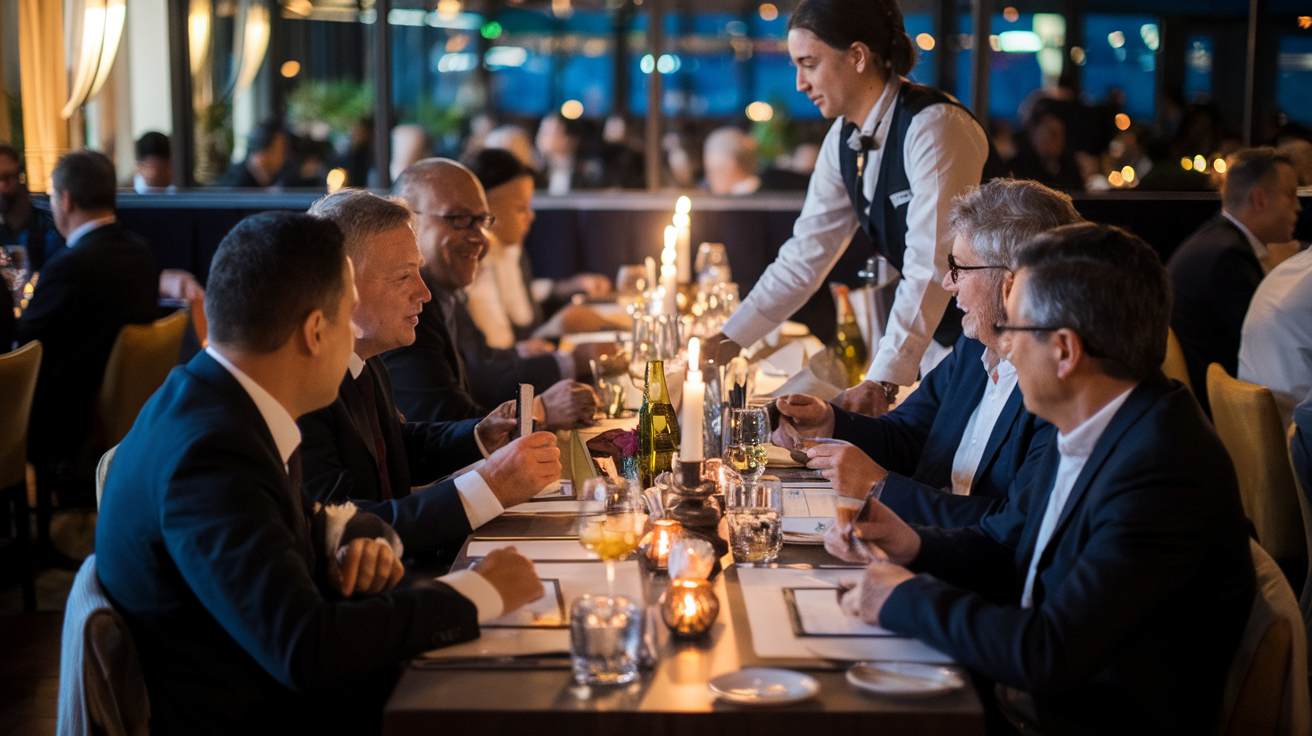
Learn how SYSOI's CRM-native attribution framework captures pipeline credit from executive dinners and field events that never touch your event platform.
TL;DR — Every attribution model built for digital marketing fails at executive dinners and field events because those touchpoints produce no badge scans, no form fills, and no pixel data. SYSOI's intelligence layer solves this at the architecture level by ingesting calendar invites, CRM tasks, and manual attendance logs as structured signals, constructing a timestamped opportunity-stage-anchored touchpoint without requiring a formal event platform. The result is auditable, board-ready pipeline attribution for the events that close the most deals but leave the least data behind.
Your top AE closed a $340,000 deal last quarter. You know the executive dinner in Austin played a role. The CFO wants to know how much credit to assign it. Your Salesforce instance shows a contact record, an opportunity, and three follow-up emails. The dinner itself is nowhere in the data.
This is not a logging problem. It is not a process discipline problem you can solve with a Slack reminder to AEs. It is a structural failure in the architecture of every attribution model the revenue team already owns. Marketo was built to track a click. HubSpot was built to track a form. Cvent was built to track a badge scan. None of them was built to track a 14-person dinner at a private restaurant where the only record of attendance is a spreadsheet in someone's Google Drive and a calendar invite that expired when the meeting ended.
The companies that are winning field event attribution right now are not winning because they have better process discipline. They are winning because they added a different architectural layer to the stack.
Why Executive Dinners Fall Outside Every Attribution Model You Already Own
Attribution models break at field events for a reason that has nothing to do with the quality of your CRM setup or the diligence of your events team. The failure is upstream: every major attribution framework assumes a digital handshake exists somewhere in the record. First-touch, last-touch, linear, time-decay, and position-based models all require a trackable event object to assign credit to. When that object does not exist, the model does not break gracefully. It simply assigns zero credit and moves on.
For executive dinners, hosted roundtables, and invitation-only field events, that trackable event object almost never exists in the CRM with enough structure to count. The calendar invite was sent through Google Calendar, not through your MAP. The attendance confirmation was a reply-all email, not a registration record. The conversation outcome lives in the AE's memory, which degrades at roughly the same rate as the follow-up window after the event closes.
Most attribution tools are excellent at what they were built for: paid media attribution with clean data pipelines across digital channels where pixel data, UTM parameters, and form fills exist in the data chain. But that methodology does not address CRM-instrumented attribution for offline, ungated, invitation-only events that produce no pixel data, no form fills, and no UTM parameters. It is not a flaw in those tools; it is simply a use case they were not built for.
SYSOI operates exactly in that gap. Its ingestion layer reads unstructured and semi-structured signals, including calendar invites, CRM tasks, and manual attendance logs, and constructs a timestamped, opportunity-stage-anchored touchpoint. The differentiation is architectural, not superficial.
The Three Signals That Exist at Every Field Event, and Why Most Teams Capture Zero of Them Correctly
Every executive dinner and field event produces three attributable signals, regardless of whether a formal event platform was used. The teams that close the attribution gap are the ones who capture all three with deliberate instrumentation. Most teams capture none of them in a form the CRM can use.
The three-signal framework that SYSOI uses as its ingestion baseline for field events is:
- Attendance confirmation. Who was physically in the room, tied to a contact record in the CRM, not stored in a spreadsheet or a calendar invite that expires. The failure mode here is universal: attendance lives in a Google Sheet or an Outlook calendar that nobody has permission to access, and tagging attendees to their Salesforce contact record happens days later, if at all.
- Conversation outcome. What was discussed, what objections surfaced, what the agreed next step was, and what the opportunity stage was at the moment the dinner ended. This signal exists only in the AE's memory for most teams, and memory degrades within 48 hours of the event in ways that cannot be reconstructed from CRM data. The failure mode is attribution by follow-up email: the system records that an email sequence fired two days after the dinner, and that email gets the credit.
- Pipeline velocity change. Did the opportunity advance, stall, or materialize in the 30 days after the event? This is the signal that boards actually care about, and it requires a baseline snapshot of the opportunity stage at the exact moment of the event to calculate. Without that snapshot, velocity change cannot be measured against a legitimate denominator.
SYSOI's ingestion layer reads each of these three signals as structured inputs from calendar invites, CRM tasks, and manual attendance logs, and writes a composite touchpoint record before any of the three has time to degrade. No badge scan required. No event platform in the loop.
How to Build a CRM-Native Attribution Record for Events That Never Touch Your Event Platform
Most field event attribution fails before the event ends. The Salesforce campaign record gets created after the fact. The opportunity stage has already moved for an unrelated reason by the time someone logs the dinner. The AE's account of what was discussed is already compressed into a two-sentence CRM note that loses the nuance that made the dinner worth having in the first place.
The fix is architectural, not behavioral. Asking AEs to log more carefully is not a strategy. Building a data entry protocol with defined fields, defined roles, and a hard reconciliation deadline is a strategy.
Here is the CRM-native setup that supports field event attribution in Salesforce or HubSpot without requiring a third-party event platform:
- Create a custom campaign type labeled specifically for field events. This is distinct from webinar, trade show, or conference campaign types. The distinction matters because it allows filtered attribution reporting by event format later.
- Create a custom activity type for conversation outcomes. This activity type requires three fields: conversation outcome category (categories might include product discussion, competitive displacement, pricing conversation, or executive alignment), agreed next step with a due date, and opportunity stage at time of attendance. Making opportunity stage a required field at activity creation time is the single highest-leverage change most teams can make.
- Set a 72-hour reconciliation deadline. SYSOI's reconciliation window protocol requires the five core CRM fields, including opportunity stage at time of event, attendee list tied to contact records, conversation outcome category, agreed next step, and pipeline velocity baseline, to be completed within three days of any field event. Attribution data quality degrades sharply after this window closes.
SYSOI's ingestion layer automates steps one and two by reading the calendar invite and any CRM task logged before or during the event as structured inputs, writing the campaign member record and activity record without waiting for AE manual entry. The dinner happened. The CRM just never knew about it until now.
Which Attribution Model Actually Works for Late-Stage Executive Dinners?
SYSOI attributes pipeline with multi-touch time-decay by default: it credits every event a contact touched on or before the deal was created, recency-weighted on a 180-day half-life, so a late-stage executive dinner earns real, proportional credit instead of the zero a single-touch model would assign it. Teams that want a more conservative number can switch to last-touch, which credits only the most recent event. Here is how the dinner fares under the common models, and why SYSOI lands on time-decay.
Consider a deal that has been in motion for 90 days before the executive dinner occurs. The opportunity is worth $200,000. Five touchpoints exist in the record before the dinner: a paid ad click, a webinar registration, a BDR cold email that generated a reply, an SDR discovery call, and a product demo. The executive dinner is touchpoint six. A follow-up email fires 48 hours later and becomes touchpoint seven.
Here is what each model assigns to the dinner, expressed in credit percentage and dollar value:
- First-touch: 0% / $0. The model credits the paid ad click. The dinner is invisible.
- Last-touch: 0% / $0 (assuming the deal closes after the follow-up email). The dinner is invisible again.
- Linear (equal weight across 7 touchpoints): 14% / $28,000. The dinner gets credit, but no more than the BDR cold email.
- Time-decay across digital micro-touches (exponential recency weighting): roughly 8% / $16,000 for the dinner, with a follow-up email receiving more. When a model counts every click and send, recency can reward the email the dinner made possible instead of the dinner.
- Position-based (U- or W-shaped): allocates fixed weights to first, last, and opportunity-creation touches. It can credit the dinner, but it requires a custom build and hard-codes weights that rarely match how a specific deal actually moved.
SYSOI sidesteps the micro-touch problem by attributing at the event level, not the click level. Its default is multi-touch time-decay with a 180-day half-life: credit is split across every event the contact touched on or before the deal's create date, weighted toward recency. Because a late-stage executive dinner is one of the most recent events before the deal, time-decay gives it more credit, not less, which is the opposite of the email-dilution problem. A 14-person dinner 60 days before close lands as a heavily-weighted event touchpoint, and the credit sums cleanly to the deal's value across all of the contact's events.
For teams that want the most conservative number, SYSOI also offers last-touch, which assigns 100 percent of the credit to the single most-recent event. Both are one setting on the org's attribution model; there is no custom build.
Specificity is credibility. Vague attribution is just expensive guessing with a dashboard on top.
Building a Board-Ready Field Event Attribution Report: The Four Metrics That Survive CMO Scrutiny
A CMO presenting event ROI to a board that has heard inflated event attribution claims before needs numbers that hold up under skeptical questioning, not just numbers that look good in a slide deck. The four metrics below are the ones that survive that scrutiny for field event programs specifically.
- Influenced pipeline by event type. The numerator is total pipeline from opportunities where a field event touchpoint exists in the attribution record. The denominator is total field event program spend, including venue, catering, travel, and staff time. Segment this by executive dinner, hosted roundtable, and regional field event. Boards find this credible because it is falsifiable: the touchpoint record either exists in the CRM or it does not.
- Average deal velocity change for event-touched opportunities. Compare the average days-to-close for opportunities that have a field event touchpoint in the 90-day window before close against a control group of similar-stage opportunities with no field event touchpoint in the same quarter. A positive velocity change, measured in days saved, is a board-level number that connects event investment to revenue timing, not just revenue volume.
- Cost per influenced dollar. Divide total field event program cost by total influenced pipeline. Not closed-won pipeline. Using closed-won as the denominator conflates attribution with causation and invites a challenge the CMO cannot win in a board meeting. Influenced pipeline is the defensible number.
- Stage-progression rate within 30 days of attendance. The percentage of event-touched opportunities that advanced at least one pipeline stage in the 30-day window after the field event, compared against the control group rate for the same period. This metric is compelling to boards because it demonstrates behavioral response to the event, not just correlation between attendance and eventual close.
SYSOI's board report framework generates all four of these metrics directly from the intelligence layer output, without requiring a manual data reconciliation cycle after each event. The CRM fields established during the 72-hour reconciliation window become the inputs. The report is a byproduct of good instrumentation, not a separate workstream.
What to Do Before Your Next Executive Dinner
The window to instrument a field event closes the moment the dinner starts. The three things that have to be in place before attendees sit down are: a campaign record in the CRM with a custom field event type, a conversation outcome activity template with required fields pre-populated for the AE to complete within 72 hours, and an opportunity stage snapshot tied to each attending contact at the time the calendar invite was accepted.
If none of those three things are in place today, the next dinner will produce the same zero-attribution outcome as the last one. The data will exist somewhere, spread across a calendar, a spreadsheet, and an AE's memory. It just will not exist in a form the attribution model can use.
SYSOI is built for exactly this starting point. It ingests your existing event data, including past dinners that only exist in CRM tasks and calendar history, and constructs the attribution record retroactively for events where the three-signal capture was incomplete. It does not replace Cvent, HubSpot, or Salesforce. It adds the intelligence layer those systems do not have.
If you run executive dinners and you cannot currently answer the question your CFO is going to ask at the next board review, the architectural fix is available now.
Frequently asked questions
How do you attribute pipeline from an executive dinner when no badge was scanned and no form was filled?
Attribution for ungated field events requires three structured signals captured inside your CRM: attendance confirmation tied to contact records, a conversation-outcome activity with a logged next step, and an opportunity stage snapshot at the time of the event. SYSOI's ingestion layer reads calendar invites and CRM tasks as structured inputs and constructs a timestamped campaign touchpoint without requiring a formal event platform. The dinner happened. The CRM just never knew about it until now, and the fix is architectural rather than a process discipline problem.
Which multi-touch attribution model works best for late-stage executive dinners?
SYSOI attributes pipeline at the event level using multi-touch time-decay by default: credit is split across every event a contact touched on or before the deal's create date, weighted toward recency on a 180-day half-life. Because a late-stage executive dinner is one of the most recent events before the deal, it earns proportionally more credit, not less, which is the opposite of the dilution you get when a model counts every digital micro-touch and a follow-up email out-weighs the dinner. Teams that want a more conservative number can switch to last-touch, which credits only the single most-recent event. Both are a single setting, with no custom attribution build required.
What is the 72-hour reconciliation window for field event attribution?
The 72-hour reconciliation window is the post-event protocol within which five CRM fields must be completed: opportunity stage at time of attendance, attendee list tied to contact records, conversation outcome category, agreed next step with a due date, and a pipeline velocity baseline. Attribution data quality degrades sharply after this window closes because AEs forget conversation details, opportunity stages update for unrelated reasons, and the causal link between the event and the next meeting becomes impossible to reconstruct from CRM data alone. SYSOI's ingestion layer automates the signal capture by reading calendar invites and CRM tasks before manual entry degrades.
Can Salesforce or HubSpot track executive dinner attribution without a third-party event platform?
Yes, with deliberate instrumentation. The required setup includes a custom campaign type for field events, a custom activity type for conversation outcomes with a required category field, and a required opportunity stage field at the time of attendance. The structural gap is not the CRM itself but the absence of a defined data entry protocol and a hard reconciliation deadline. SYSOI's ingestion layer automates the signal capture by reading calendar invites and CRM tasks as structured inputs, removing the dependency on AE manual entry after the event ends.
What metrics should a board-ready field event attribution report include?
The four metrics that survive board-level scrutiny for field event programs are: influenced pipeline by event type (using total pipeline from event-touched opportunities divided by total event spend), average deal velocity change compared to a control group of similar-stage opportunities with no event touchpoint, cost per influenced dollar using total event cost divided by influenced pipeline rather than closed-won pipeline, and stage-progression rate within 30 days of attendance versus the control group. Using influenced pipeline rather than closed-won as the denominator is critical because it avoids conflating attribution with causation, which boards and CFOs will challenge immediately.
What is the difference between an event intelligence layer and an event management platform?
An event management platform (Cvent, RainFocus, and similar tools) handles logistics, registration, badging, and workflow for events that run through that platform. An event intelligence layer sits across all event platforms, including events that never touch a formal platform such as executive dinners and hosted roundtables, and constructs unified attribution records, readiness scores, and CRM-enriched contact records from every signal type. SYSOI is an intelligence layer only: it does not replace existing event platforms or CRMs but adds the attribution and enrichment capability those systems do not provide for offline and ungated events.